2026 Best Chemical Catalyst Innovations and Trends for Sustainable Solutions?
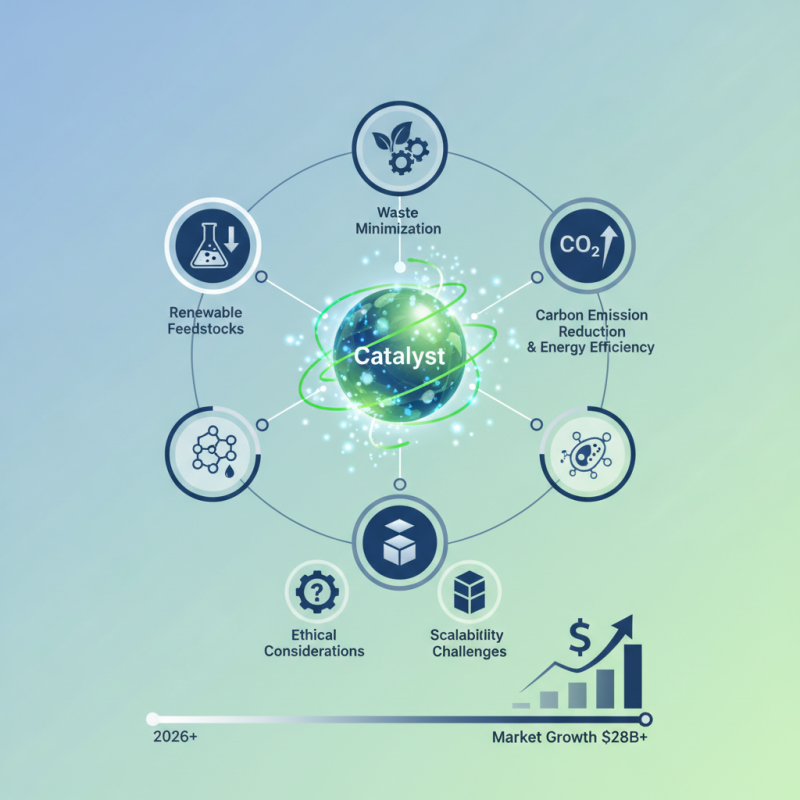
The field of chemical catalysts is witnessing transformative innovations. Market insights reveal that the global catalyst market is projected to exceed $28 billion by 2026. This growth is driven by the pressing need for sustainable solutions. The urgency to reduce carbon emissions and enhance energy efficiency is fuelling advancements in catalytic processes.
Recent studies indicate that over 60% of chemical reactions rely on catalysts, underscoring their integral role in various industries. The push towards green chemistry emphasizes catalysts that enable renewable feedstocks and minimize waste. Innovations in nanotechnology and biocatalysis are at the forefront, although ethical considerations and scalability remain challenges.
Despite substantial advancements, not all developments yield immediate results. Some new catalysts may underperform in real-world applications. Continuous improvement and testing are vital for their successful adoption. The journey towards effective chemical catalyst solutions for sustainability is ongoing, marked by both breakthroughs and hurdles.
Recent Advances in Chemical Catalyst Technologies for Sustainability
The recent advances in chemical catalyst technologies highlight significant progress in creating sustainable solutions. Researchers are exploring new materials that can enhance reaction efficiency. For instance, hybrid catalysts combining metals with organic compounds are gaining attention. These combinations can improve conversion rates while reducing energy consumption.
Moreover, the focus is shifting towards biocatalysts derived from natural sources. These catalysts offer unique properties that facilitate more environmentally friendly processes. However, scaling these technologies remains a challenge. Many biocatalysts perform well under specific conditions, which may not always align with industrial needs.
There’s also a growing interest in recycling catalysts. Innovations aim to make catalyst recovery easier. Yet, the methods available often require extensive energy inputs. This dichotomy raises questions about true sustainability. Improvements are needed, and success depends on addressing these challenges. The path to sustainable chemical practices is complex but promising. Each step forward offers valuable lessons, prompting continuous innovation and reflection.
Key Innovations in Catalytic Processes for Carbon Reduction
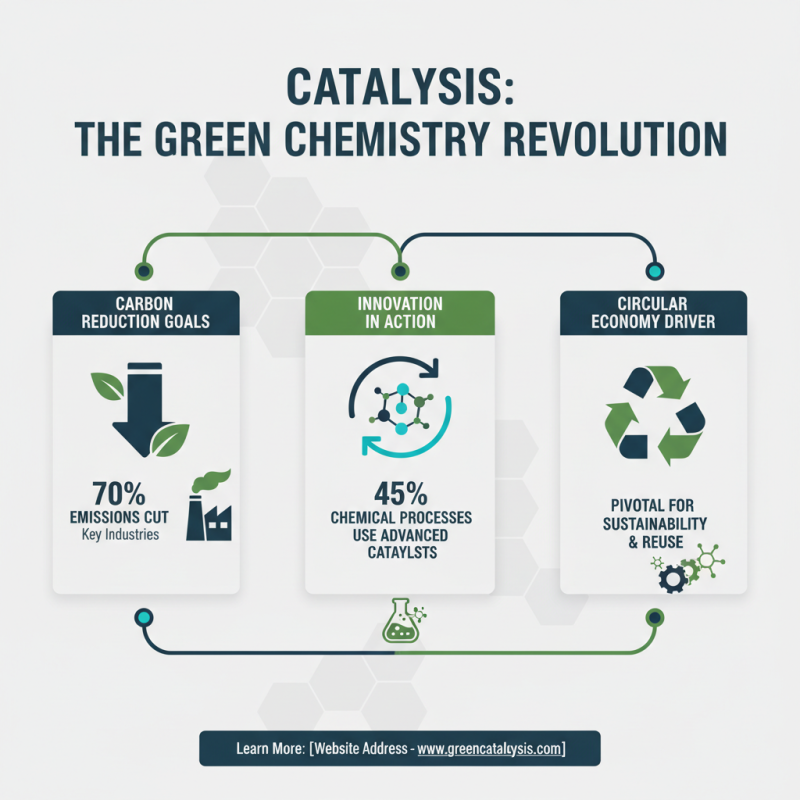
The focus on carbon reduction has spurred significant innovation in catalytic processes. Recent studies indicate that catalysis can help achieve a 70% reduction in carbon emissions from key industries. Strikingly, over 45% of chemical processes now employ advanced catalysts designed for sustainability. These innovations are pivotal for driving circular economy initiatives.
One prominent trend is the development of bio-based catalysts. These catalysts, derived from renewable resources, show promise in reducing reliance on fossil fuels. For instance, a report from the International Energy Agency highlights that bio-catalysts can improve reaction efficiency by up to 40%. Despite these advances, challenges remain in scaling up production. The transition from lab research to commercial application is often fraught with hurdles.
Additionally, electrochemical catalysis has gained traction, providing a pathway for direct carbon capture from the atmosphere. Laboratory data suggest that this technology could enhance carbon fixation rates by up to 50%. However, inconsistencies in efficiency and economic viability demand continuous refinement. Innovators must strive to balance performance with cost-effectiveness while navigating these complex challenges.
Emerging Trends in Biocatalysts for Green Chemistry Applications
Emerging trends in biocatalysts highlight their pivotal role in green chemistry applications. These natural catalysts can significantly reduce energy consumption in chemical processes.
Enzymes, which are a key component of biocatalysts, facilitate reactions at ambient temperatures. This reduces the need for harsh chemicals and extreme conditions.
However, the development of biocatalysts often encounters challenges. Inconsistent activity levels can hinder their widespread application. Researchers are working to improve enzyme stability and reusability. Enhancements in immobilization techniques could address these issues, leading to more efficient processes.
Biocatalysts can also face selectivity problems, limiting their effectiveness in some reactions.
Despite these hurdles, the potential for biocatalysts in sustainable chemistry is promising. Innovations in genetic engineering are paving the way for tailor-made enzymes. This could lead to more specific and efficient reactions in various industries.
As we explore these emerging trends, we must consider the need for better optimization and commercial viability. Balancing efficiency and sustainability remains a complex task, but the journey is worth it.
Impact of Nanotechnology on Catalyst Performance and Sustainability
Nanotechnology has revolutionized the field of catalysts. Tiny materials at the nanoscale can enhance reaction rates significantly. This is vital for developing sustainable chemical processes. With improved surface area and unique properties, nanoparticles can lead to more efficient energy use. The potential to reduce energy consumption in chemical reactions is immense.
Tips: Always consider scalability. Not all nanomaterials can be easily produced in large quantities. Assess the environmental impact of nanomaterials, too. It’s important to balance innovation with sustainability.
Nanotechnology can also help recycle catalysts. Traditional catalysts often degrade over time, limiting their effectiveness. Nanomaterials can be designed for better resilience. This allows for longer-lasting catalysts, less waste, and reduced costs. However, the stability of nanomaterials in various conditions needs careful evaluation.
Tips: Experiment with different nanostructures. They can provide surprising results. Stay informed about ongoing research in this area. Knowing the latest trends can guide better practices.
Future Prospects: Catalysts for Renewable Energy and Circular Economy
Catalysts are essential for advancing renewable energy and promoting a circular economy. Recent studies highlight the potential of innovative catalysts to revolutionize green technologies. A report from the International Energy Agency reveals that catalysts could boost the efficiency of hydrogen production by up to 30%. This improvement is crucial for clean energy goals.
In the realm of circular economies, catalysts play a transformative role. They help convert waste materials into valuable resources, reducing environmental impact. Research indicates that utilizing catalytic processes can enhance recycling rates significantly, by as much as 50% in certain sectors. Yet, challenges remain. Many catalysts are expensive and not widely adopted. This could hinder progress.
Furthermore, while advancements are promising, they require ongoing attention. The effectiveness and sustainability of these catalysts must be rigorously tested. Continuous innovation is necessary to address environmental concerns. Current data shows that many industries still rely on traditional methods. There's a pressing need for a shift towards sustainable practices.